


We have once again been recognised by Chambers & Partners as a leading firm and 7 of our...
The Renters’ Rights Act 2025 has now passed into law, marking the most notable update to the private rented sector in many years. With most reforms scheduled to come into force from May 2026, and the rollout of a national landlord database later this year, landlords are being encouraged to use this transition period to tighten their management practices and ensure their paperwork is up to standard.
While the intention of the Act is to raise housing quality and boost tenant protections, smaller or self‑managing landlords are likely to feel the practical impact most. The new regime requires clear evidence, reliable record‑keeping and strict compliance with prescribed processes.
A headline change is the end of section 21 “no‑fault” evictions. From May 2026 onwards, landlords will have to rely on specific legal grounds to regain possession and may be required to demonstrate breaches, arrears or other qualifying issues. Any inaccuracies in notices or documents could result in costly delays or failed applications.
Rent regulation is also being tightened. Increases will be subject to stricter rules around timing and procedure, and tenants will have stronger avenues to challenge them. With rising operating costs, landlords will need well-organised records and compliant documentation to support any increase.
Additional reforms include broader enforcement powers for local authorities, the compulsory Private Rented Sector Landlord Ombudsman, and the forthcoming landlord database, all designed to improve transparency and accountability. Informal or inconsistent approaches that may have worked previously will carry far more risk under the new framework.
Despite the political discussion surrounding the legislation, the biggest day‑to‑day shift for landlords will be procedural. Tenancy agreements, rent reviews, notices and general record‑keeping must all be robust, clear and ready for scrutiny. While professional management is not mandatory, having well‑defined processes will help landlords avoid disputes and enforcement action.
Headline reforms include:
- All tenancies moving to periodic arrangements, bringing an end to fixed‑term assured shorthold tenancies
- Abolition of section 21 “no‑fault” evictions
- Updated possession grounds, including safeguards for landlords selling or moving back into a property
- Stronger protections against eviction via inflated rent increases
- Limits on how often rent can be raised, plus clearer procedures
- Introduction of a mandatory Private Rented Sector Landlord Ombudsman
- Launch of a national landlord database, required for using certain possession grounds
- Greater rights for tenants requesting pets
- Extension of the Decent Homes Standard to private rentals
- Implementation of Awaab’s Law, ensuring swift action on serious hazards
- Ban on discrimination against tenants with children or receiving benefits
- Ban on rental bidding, requiring landlords to advertise fixed rents
- Increased investigatory powers and higher penalties for local authorities
- Strengthened rent repayment orders with potential for larger awards
One further requirement landlords should prepare for ahead of the new regime is the introduction of a mandatory government information sheet for tenants.
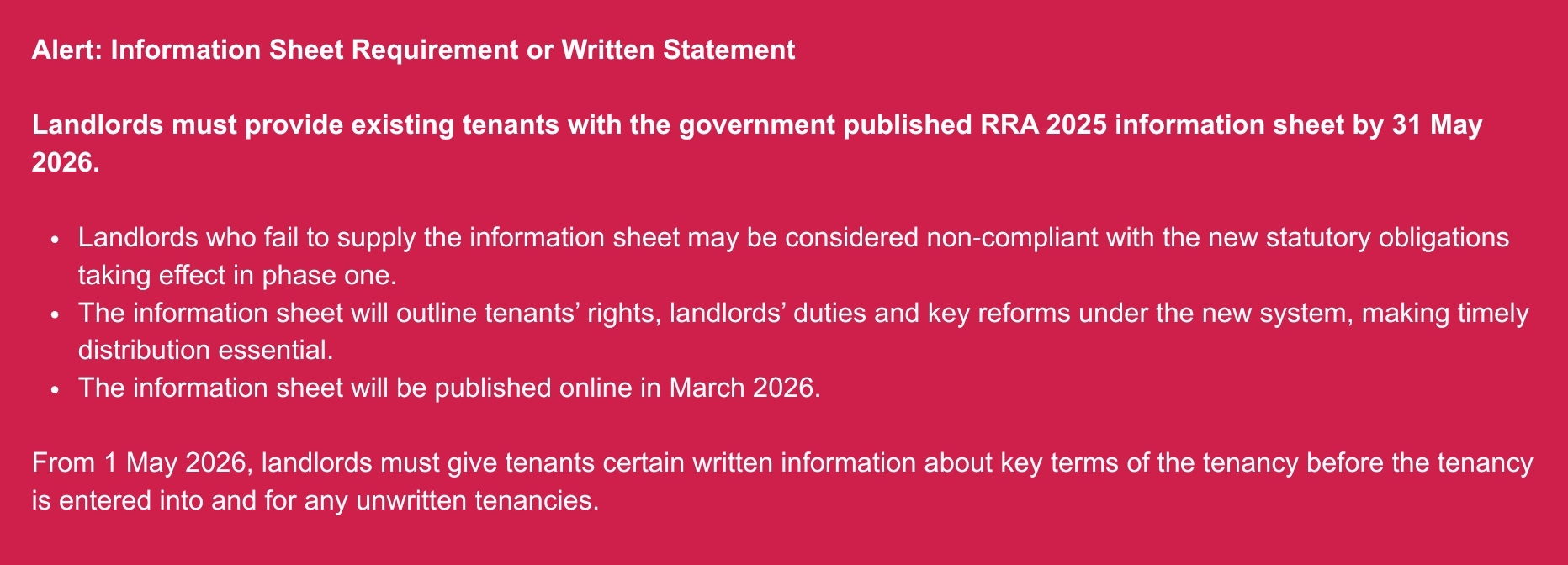
Official government guidance has been issued to help landlords prepare for this. Written information that must be given to tenants: guidance for landlords.
Official government guidance has been issued to help existing tenants understand the Renters' Rights Act, what changes have been made and the expectations of landlords. The Renters’ Rights Act Information Sheet 2026.
We support private residential landlords with a wide range of issues, from possession and rent arrears to complex tenancy disputes. To get in touch, contact Elsie D'Jabi on 01689 887806 or by email at elsie.djabi@cwj.co.uk.